Standout Fireplace Tile Designs...
Signs of their Times!
Beautiful fireplace tile designs have enchanted us for centuries and con-
tinue to be faithfully reproduced in
the same painstaking manner as the originals that inspired them. As an important architectural element --
generally the focal point of a room -- the fireplace has served as an ide-
al canvas for tile artisans to
showcase their colorful and often magnifi-
cent creations!
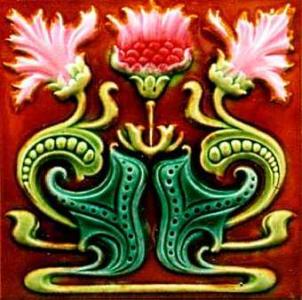
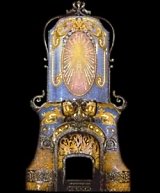
Antique Art Nouveau Tile from Belgium, ca. 1910
Frequently reflecting various aspects of the time and region in which they were produced, decorative tiles
were infused with historic imagery and mo-
tifs, artistic trends, popular themes, stories and events related to
the na-
tive cultures of the artisans who cre-
ated them. That tradition continues today, thanks to the tireless
efforts
of a dedicated group of designers
and manufacturers around the world committed to preserving their
cultur-
al legacies by reproducing some of
the outstanding creations of their im-
mensely talented forebears.
For example, the Victorian era pro-
duced a number of outstanding de-
signers whose vast range of works
are as popular today as they were back then. People such as William Morris (1834-1896) -- one of the founding fathers of
the
Arts & Crafts Movement in England. His close friend, William de Morgan (1839-1917), was one of Britain's most talented pottery and
tile designers. Popular Victorian-
era designs manufactured by 19th century tileworks such as Minton Hol-
lis in
England are, once again, being faithfully reproduced today.
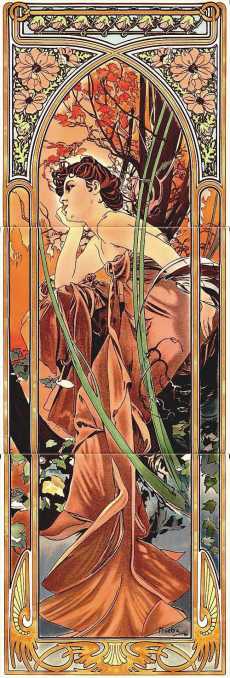
Alphonse Mucha (1860-1939), though born in Morovia, became famous in 1890's Paris as an illustrator
and artist in the
Art Nouveau style. Many of his designs are currently being repro-
duced in the form of exquisite fire-
place tiles, such as those
pictured at right from Historic Style (historicstyle
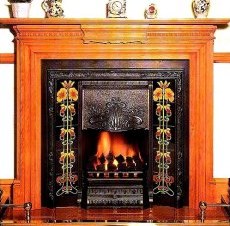
.com) in Canada. The five tile sets
flanking the Victorian cast iron fire-
place grate pictured below are also
from Historic Style.
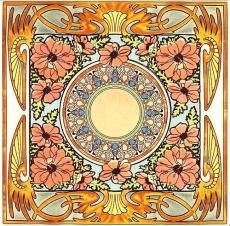

Art Nouveau Lily and Berry Tile Set in Brown from Historic Style
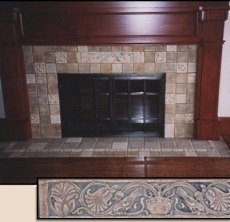
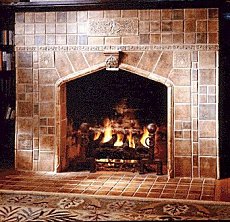
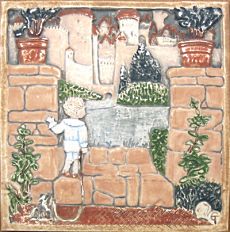
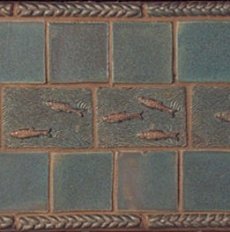
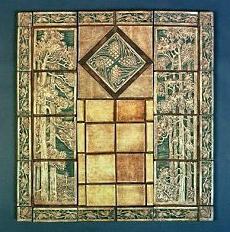
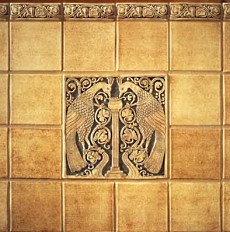
One of the leading designers and creators of Arts and Crafts tiles in Amer-
ica was Ernest Batchelder (1875-
1957), whose tileworks produced beau-
tifully hand-crafted art tiles from 1912 to 1932. Distinguished by their
warm, muted colors, design quality, and variety of timeless pictorial themes, Batchelder tiles are being
reproduced today using many of the same time-honored techniques and materials employed by Batchelder,
himself.
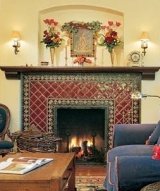
The following examples include historically accurate reproductions, as well as tiles in the style of those originally created by Ernest Batchelder. The handwrought individuality and soft, natural tones make them equally suited for period and modern fireplace designs. Their subtle, unglazed, and earthy surfaces flow with warmth and craftsmanship.
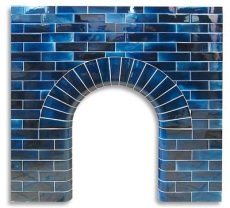
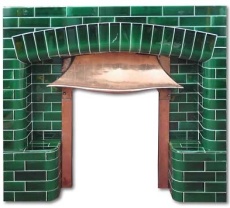
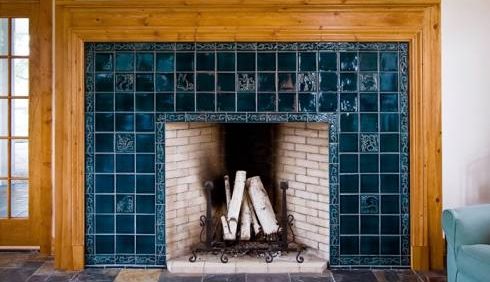
Just as beautiful -- albeit with a much different look -- are the following tile reproductions, the first two (top row) of which are Edwardian arched fireplace surrounds popular in England. The brilliant sheen and striking variations in shading and tone are achieved with a special process in which the tiles are hand dipped in glaze and fired at different angles in the kiln to recreate an authentic look. When framed by a beautifully finished wood mantel, the result is absolutely stunning!
The
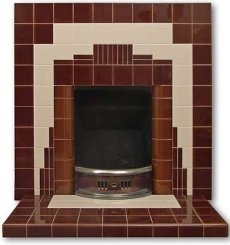
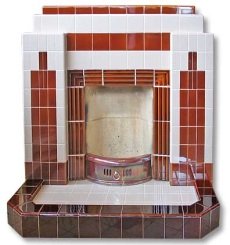
Art Deco Movement produced some new and exciting fireplace tile designs which are also being reproduced today. The designs of the two
examples below, manufactured in England, were inspired by the skyscraper
. . . . . a new building type coming into
its own during that period.
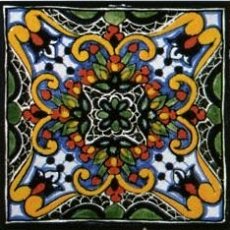
Moving, geographically, to another part of the world, the colorful talavera tiles pictured below are made in Mexico. Talavera goes back to the 16th century in Mexico when it was introduced by the Spaniards. The Old World antecedents of these hand-painted designs are closely related to the California art tiles of the 1930s.
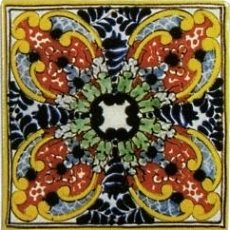
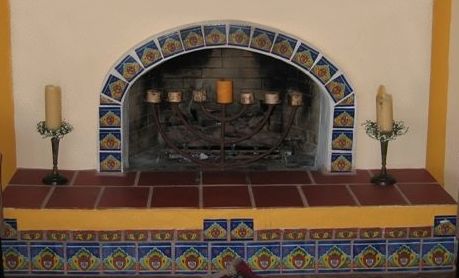
Please click here to see more Spanish-inspired fireplace tile designs.
More Fireplace Tile Designs
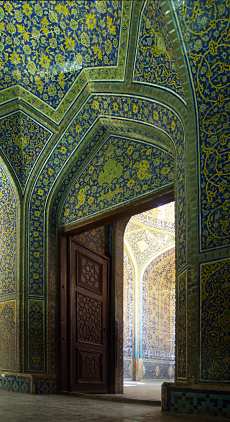
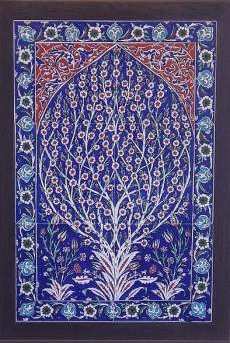
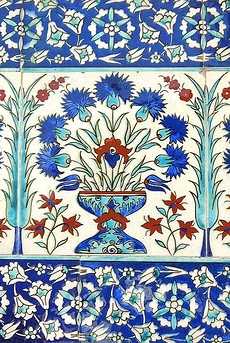
Switching geographic regions, yet again, the beautiful Turkish tiles pictured below are part of a rich
historical legacy dating back several centuries. After the Islamic conquest of Persia, colored and often
painted glazed tiles became an important el-
ement in Persian architecture, and from there spread to much of
the Is-
lamic world, notably the Ýznik pot-
tery of Turkey under the Ottoman Empire in the 16th and 17th centur-
ies.
Palaces, public buildings, & mosques (right) were heavily decorated with dense, often massive patterns and
friezes of astonishing complexity, in-
cluding geometric patterns and cal-
ligraphy, as well as floral motifs such
as those shown in the examples be-
low. These and similar patterns con-
tinue to be reproduced today . . . not
only in Turkey, but in a number of
other countries that also border the
Mediterranean, including Tunisia and
Morocco.
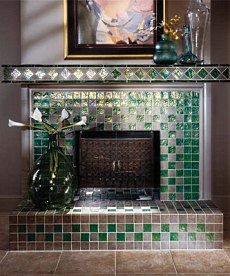
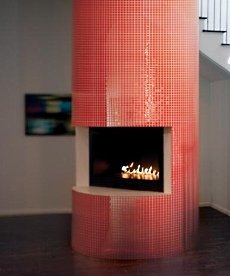
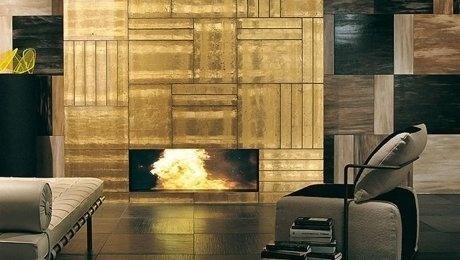
In addition to the reproduction and creation of traditionally styled fireplace tile designs, new designs, materials and looks are continually being created and showcased at special events held annually around the world. The unique designs that follow . . . jewel-like prism glass tiles on the left . . . small mosaic squares enveloping a cylindrically-shaped fireplace on the right . . . and larger, but sleek Italian tiles on the contemporary surround below . . . are but a sampling of newer looks for fireplace tile designs . . . . . and, perhaps, just a hint at fresh and exciting designs yet to come!
Please check back often or subscribe to our
RSS feed, as we fre-
quently add new fireplace tile designs to our site.
YOU MAY ALSO LIKE:
The Tile Fireplace Surround -
Amazing Arts & Crafts Creations!
More Arts & Crafts Fireplace Tile Designs

Unique Arts & Crafts Style Tiles
Art Nouveau Tile Fireplace Designs

More Art Nouveau Tile Fireplace Designs
Spanish Inspired Fireplace Tile Designs
Return to Fireplace Mantel Designs
Return to Standout Fireplace Designs Home Page
Didn't find what you were looking for?
Use this search feature to find it.
LIKE THIS PAGE?


Use this search feature to quickly find the information you're looking for.
Please visit our sister site,
Standout-Tile-Designs.com,
to see more exciting . . . . .
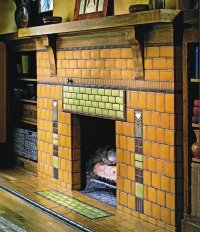
Fireplace Tile Designs
Framing the Flames!
Related Pages
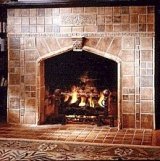
Fireplace Tile Designs
Signs of their Times!
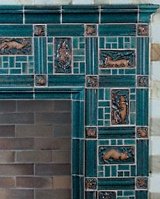
Standout Fireplace Tile
Arts & Crafts Style!
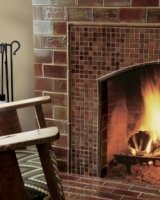
More Fireplace Tiles
In Arts & Crafts Styles!
The Art Nouveau Tile Fireplace
Sinuous & Sensual!
More Art Nouveau Tile Fireplaces
Moulded to a "T"
The Tile Fireplace Surround
Amazing Arts & Crafts Creations!
The Craftsman Fireplace
A Standout Fire Space!
Craftsman Fireplaces
More Standout Fire Spaces!
The Arts & Crafts Fireplace
A Finely Crafted Fire Space!
More Arts & Crafts Fireplaces
Finely Crafted Fire Spaces!
Modern Craftsman Fireplaces
A New Twist on an Old Theme!
The Spanish Style Fireplace
A Rich & Colorful Heritage!
Subscribe to our Free e-Newsletter for More Exciting Fireplace Design Ideas!
Click Here for More Information
New! Comments
Have your say about what you just read! Leave me a comment in the box below.